A simple chart of accounts structure, a numbering scheme that scales, and the mistakes that make books hard to read at tax time.
A new business owner rarely thinks about the chart of accounts until the reports look confusing or the first tax return comes round. The chart is the list that every transaction goes into. Get the chart of accounts setup right on day one, and the reports and the return read clearly. Get it wrong, and someone untangles it later.
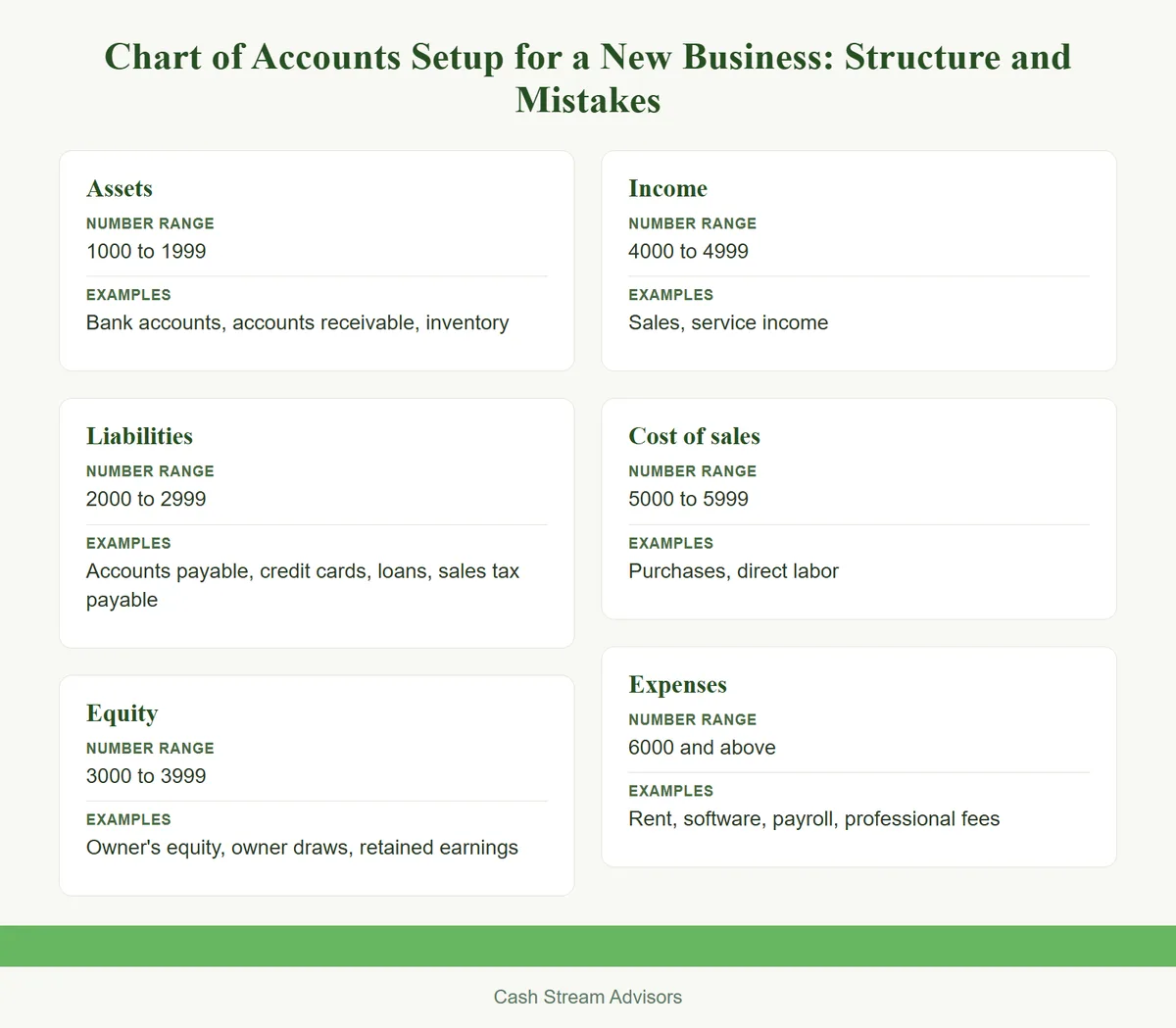
The structure in one table
A common scheme looks like this. Your own ranges can differ, as long as you keep to them.
| Type | Number range | Examples |
|---|---|---|
| Assets | 1000 to 1999 | Bank accounts, accounts receivable, inventory |
| Liabilities | 2000 to 2999 | Accounts payable, credit cards, loans, sales tax payable |
| Equity | 3000 to 3999 | Owner's equity, owner draws, retained earnings |
| Income | 4000 to 4999 | Sales, service income |
| Cost of sales | 5000 to 5999 | Purchases, direct labor |
| Expenses | 6000 and above | Rent, software, payroll, professional fees |
Choose the software first, because each tool handles the default list differently. For the choice, read QuickBooks vs Zoho Books vs Xero: Which Suits a Small Business.
Chart of accounts numbering that scales
Number by type and leave gaps between accounts. If the bank accounts run 1010, 1020 and 1030, a new account for a loan receivable can take 1025 without renumbering. A sub-account works the same way: a main expense account at 6100 can hold sub-accounts at 6110 and 6120. Gaps are what make the numbering scale as the business grows.
Five mistakes that make books hard to read
- 1
Too many accounts. Most hold small balances, and coding errors rise. Fix: consolidate into fewer, broader accounts.
- 2
Catch-all accounts. "Miscellaneous" or "other" hide detail. Fix: use them sparingly, and review what sits in them each month.
- 3
Personal and business mixed. Personal spending sits in business accounts. Fix: separate it and reclassify with the owner.
- 4
Missing balance sheet accounts. Loans, owner draws, or sales tax have no account, so they land in expenses. Fix: add the accounts and move the entries.
- 5
Never reviewed. Old and unused accounts remain. Fix: review the list at least once a year.
For what the return pulls from these accounts, read Why Your Books Must Be Ready Before Your Tax Return Is Filed.
How many accounts does a new business need?
There is no standard number. It depends on the kind of client, the size of the business and what the owner needs to see. We do not use one fixed chart for every client. We start from the software's default list and remove the accounts that are not relevant, keeping the few that are. We do the same in Xero and Zoho Books.
How we set up a chart for a new client
We fit the chart to the client's business, size and needs, so it is flexible. The owner does not need to design the chart. For the full onboarding, read What to Expect When You Outsource Your Bookkeeping.
Already have a messy chart?
Changing a chart that has history needs care, because past and present reports can stop matching. Larger changes are cleaner at the start of a fiscal year. If your books are also behind, start with Catch-Up Bookkeeping: Getting Months or Years of Books Current. Message us on WhatsApp to talk it through.
Talk to an advisor
If you want the chart of accounts set up properly from the start, message us on WhatsApp, book a consultation, or write to contact@cashstreamadvisors.com.
This Insights article is general information, not advice on a specific transaction. Read our disclaimer and regulatory compliance pages.
US bookkeeping service
INSIGHTSQuickBooks vs Zoho Books vs Xero: Which Suits a Small Business
INSIGHTSMonth-End Close Checklist for Small Businesses: A Working Routine
INSIGHTSBank Reconciliation Not Matching? Common Errors and How to Fix Them
SERVICEAll insights
ABOUTAbout Cash Stream Advisors
CONTACTContact us
Bookkeeping
Monthly books, catch-up and cleanup, and tax filing in QuickBooks, Zoho Books or Xero., handled so it does not become the subject of your next article.